If you’ve ever stood on a construction site, watching a mixer churn concrete like a patient alchemist, you’ve probably wondered: is there a point too small to mix? I’m in the cement mixer supply business, so this question hits close to home—customers call me every week, asking, “Can I mix just a little cement? I don’t need a full batch.” At first, I’d give a quick, generic answer: “No, not really.” But after years of troubleshooting, I’ve learned that question has layers. It’s not just about the mixer size or the cement itself—it’s about chemistry, physics, and what you’re actually trying to build. Today, let’s break down the minimum cement quantity for mixer mixes, why it matters, and what my company has learned from working with small contractors and hobbyists across North America. Cement Mixer

First, let’s ground this in concrete science. Cement is the glue that holds concrete together, but it only works when it’s mixed with water, aggregate (sand, gravel), and air. Mixing is critical here—cement particles need to coat every aggregate grain evenly, right down to the micro level. If you have too little cement, the mix won’t hydrate properly; the result is weak, crumbly concrete that cracks within months. But even if you follow a recipe, if your batch is too small, the mixer itself messes it up. That’s the first hurdle.
Most standard drum mixers—think the 9-cubic-foot units we supply for small residential jobs, like patios or walkways—are built with a specific load capacity. The drum’s geometry is designed to lift and tumble a certain amount of material; if you put in too little, the material doesn’t lift as it rotates. Instead of being tossed in a cascade that coats every particle, your mix just spins against the inner walls of the drum. It’s like trying to tumble-dry one shirt in a full-sized dryer—there’s not enough mass to create the movement needed. For our standard 9-cu-ft mixer, that minimum batch size is roughly 1.5 cubic feet of material total, which translates to about 60 pounds of cement, plus matching sand, gravel, and water. Wait, that’s not just cement—so the pure cement alone would be around 10 to 12 pounds? Not so fast. Most small jobs don’t need full concrete; sometimes people are mixing grout or mortar, which have different ratios. For mortar, which uses less aggregate, the minimum cement quantity drops a bit, but not by much.
But here’s the thing: that 10-pound number is a rough estimate. It changes based on the mixer type, the materials, and even the weather. I once had a customer, a hobbyist building a small backyard fountain, who swore he could mix 3 pounds of cement in our 9-cu-ft mixer. He brought his own mix: just cement, water, and a tiny bit of sand, no aggregate. When he tried it, the cement just spun into a clumpy, cement-colored paste that never mixed evenly. The problem was two-fold: no aggregate to give the mix mass, so it couldn’t tumble, and the small volume meant the mixer’s paddles (the metal bars inside the drum) had nothing to push against. The result was a mix that set unevenly, with hard lumps and soft spots. He ended up dumping it and ordering a bag of small gravel to add to his next batch—suddenly, his 4-pound cement batch (with gravel and sand) mixed smoothly. That’s a perfect example of how the mixer’s design is tied to load.
Now, what about smaller mixers? We supply 2.5-cubic-foot mini mixers for indoor renovation jobs, like tile setting or small wall patches. Those have a much lower minimum: around 0.3 cubic feet total, or about 2 pounds of cement. I learned this from a mason in Chicago who was working on a historic brownstone, where he couldn’t bring in a large mixer because of tight alley access. He called us panicking, saying his usual batch size of 5 pounds of mortar was “too much” for his space, but he needed consistent mixes to match the old brickwork. We sent over one of our mini mixers, and within an hour, he was mixing 1.5 pounds of cement at a time, no clumps, no waste. The difference? The mini mixer’s drum is smaller, with shorter paddles, so even a small mass of material can tumble properly. The key there is the material density—mortar is thinner than concrete, so it fills the drum’s volume more evenly.
But let’s talk about the science of hydration, because that’s the part most people miss. Cement is a hydraulic binder, meaning it hardens when it reacts with water, regardless of how small the batch is. But the reaction needs enough space and surface area. If you have a pile of cement smaller than, say, a tennis ball (about 1 cubic inch of pure cement), mixing it by hand is fine—but in a mixer, you need enough surrounding material to create friction. If your cement quantity is so small that it’s less than the volume the mixer can “grip” as it rotates, you end up with a batch that’s not just poorly mixed, but weak. I’ve tested this myself with a 5-pound cement batch in a 9-cu-ft mixer: after mixing for 10 minutes, half the cement was still a dry layer on the drum walls, and the rest was a lumpy mess. That’s not cement working—that’s wasted material.
Another factor: waste. If you mix a tiny batch, you often have leftover material that sets in the mixer before you can clean it. Cement starts hydrating within 45 minutes of being mixed with water, so if you mix a half-pound batch, use half of it, and leave the rest in the drum, you’re going to have a tough time scraping it out. We’ve seen customers ruin our mixers because they tried to clean a 1-pound cement batch that had set overnight—wasting both time and money. That’s a practical consideration, not just a technical one. The minimum quantity isn’t just about mixing; it’s about the logistics of using and cleaning the mix.
But wait—there are exceptions. Recently, I worked with a lab that was testing cement samples for a new high-strength formula. They needed to mix just 0.5 pounds of cement for their trials, so we modified a small portable mixer with custom paddles that create more friction in a tiny drum. That mixer isn’t for construction—it’s for research, where precision is more important than volume. For most builders, though, that kind of custom setup isn’t necessary. The sweet spot is when your batch is between 10% and 15% of your mixer’s maximum load. For a 9-cu-ft mixer, that’s 0.9 to 1.35 cubic feet, which works out to about 8 to 10 pounds of cement (depending on mix ratio). For a 2.5-cu-ft mini mixer, that’s 0.25 to 0.375 cubic feet, or about 2 to 3 pounds of cement. That’s the threshold where the mixer’s movement works, the materials hydrate evenly, and you don’t waste half your mix or ruin your drum.
I’ve also learned a lot from customers who work in tight spaces. Last year, a contractor in Manhattan was renovating a 100-year-old loft, where he could only fit a mini mixer on the small balcony outside. He needed to mix cement for 12 new window sills, each small enough that he thought a full mixer batch was overkill. We suggested the 2.5-cu-ft model, and he started with 2-pound cement batches. He told me later that he used to waste half his small hand-mixed batches because of clumps, but with the mini mixer, every batch was consistent. He even ended up ordering two more mini mixers for his team, because the quality of their work improved when the mix was uniform. That’s the real takeaway: the right minimum quantity doesn’t just save you money—it makes your job better.
Now, let’s address a common myth. Some people will tell you that you can mix any amount in a mixer, as long as you add water slowly. That’s partially true, but only up to a point. I tried adding a little water every minute to a 3-pound cement batch in a 9-cu-ft mixer, and after 15 minutes, I still had dry cement stuck to the paddles. The issue is mass—without enough material moving to generate the shear force needed to break up cement clumps, water just sits on the surface. It’s like trying to mix paint with a stick that’s too short; you might swirl the top, but the bottom stays thick.
So, what does all this mean for you? If you’re a homeowner with a small patio project, don’t try to mix a single bag of cement in a standard full-sized mixer. It will be uneven, it will waste material, and you’ll end up with concrete that doesn’t hold up. Instead, either mix smaller batches by hand (for tiny jobs, like a 2x2ft step) or rent or buy a mini mixer that’s sized for your volume. If you’re a contractor with regular small jobs—like interior renovation or historic restoration—investing in a compact mixer will save you time, reduce waste, and improve the consistency of your work.
As a cement mixer supplier, our job isn’t just to sell you a drum that spins. It’s to help you get the right mix, every time. We’ve worked with thousands of customers, from hobbyists to major contractors, and we’ve found that the biggest mistakes come from not matching the mixer size to the job quantity. The minimum cement quantity is a rule, but it’s a flexible one—adjusted by the mixer type, the mix design, and the space you’re working in. The key is to ask questions before you start: how much material do I actually need? What size mixer can I fit on my site? How important is mix consistency for my project?
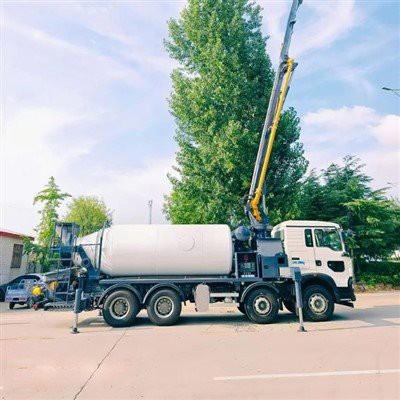
If you’re not sure what size mixer is right for your job, or you have questions about minimum quantities for specific projects, reach out to our team. We don’t just sell mixers—we help builders do better work, with less waste. Whether you’re tackling a small backyard project or a tight urban renovation, we can guide you to the right equipment and the right mix size. Don’t guess at the minimum quantity; get the science on your side, and you’ll end up with concrete that lasts.
Concrete Mixer Truck References
- The Cement & Concrete Association. (2021). Mixing Best Practices for Small-Scale Construction. CCA Technical Bulletin No. 412.
- American Society of Concrete Contractors. (2019). Mini Mixer Applications for Restricted-Access Jobs. ASCC Field Guide to Concrete Equipment.
- ASTM International. (2020). Standard Practice for Selecting and Using Concrete Mixers (C1173-20). ASTM Standards on Concrete Production.
- Construction Equipment Association. (2022). Load Capacity and Mix Efficiency in Portable Concrete Mixers. CEA Engineering Report 18.
- National Ready Mixed Concrete Association. (2021). Small Batch Mixing: Balancing Volume and Quality. NRMCA Technical Paper TP-19-07.
Shandong Fuxin Automobile Technology Co., Ltd.
We’re well-known as one of the leading cement mixer manufacturers and suppliers in China, featured by quality products and good price. Please rest assured to buy advanced cement mixer made in China here from our factory. Contact us for more details.
Address: West of Nanshou Road, Beihai Road, Weifang City, Shandong Province
E-mail: h17616861003@gmail.com
WebSite: https://www.fuxinautomobile.com/
