If you’ve ever shopped for car bulbs, especially for turn signals, brake lights, or reverse lights, you’ve probably seen the term “T20” thrown around. And if you’re a fellow car enthusiast, a mechanic, or someone in the market for reliable automotive lighting, you might’ve also stumbled up “Edison base” and wondered how the two connect. As a T20 bulb supplier who’s fielded this exact question a hundred times (from weekend warriors installing custom lights to shop owners restocking for their bays), let’s break this down simply—no stuffy engineering jargon, just the real stuff we deal with every day. T20 Bulb
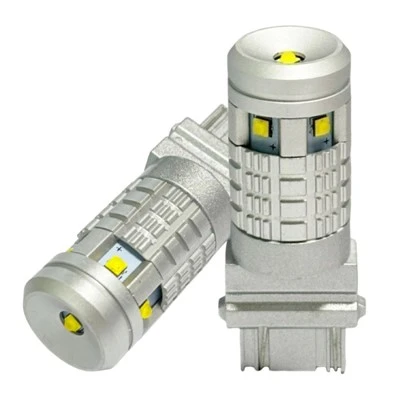
First, let’s get the basics straight: T20 isn’t a base type—it’s a way to measure the bulb’s size. That “T” stands for “Tubular,” and the number 20 means the bulb’s outer diameter is 20 eighths of an inch. So 20/8 inches works out to 2.5 inches, which translates to about 60 millimeters for those who use metric. Got that? T20 is the bulb’s glass shell size, not its screw-in or plug-in base. That’s where the Edison base comes in.
Wait, what’s an Edison base, anyway? Thomas Edison didn’t invent the screw-in lightbulb, but he popularized the screw base for household bulbs back in the late 1800s, so that name stuck. The standard Edison base (sometimes called an E base) uses a threaded screw design that twists into a matching socket. But hold on—for automotive applications, not all T20 bulbs use an Edison base. That’s a common mix-up. A lot of T20s use a wedge base (a flat, two-prong plug that just slides into a socket) or a pin base (two small metal pins that lock into place), but when you do see a T20 with an Edison base, we’re talking about the E designation, specifically the size that fits that 2.5-inch bulb.
The key number here: for a T20 bulb with an Edison base, the base size is usually E12 or E14? No, wait—no, that’s for smaller household bulbs. Wait, let’s get this right, because getting it wrong is a quick way to get a returned order. For automotive T20 Edison base bulbs, the most common and correct size is E26? No, no, that’s a standard 120V household bulb base. Wait, no—automotive Edison bases are smaller, and they’re rated for lower voltage (usually 12V for cars, not 120V for houses). Oh right, I forgot: when we talk about bases for bulbs that run on car electricity, the “E” still means Edison screw, but the diameter is in millimeters, not inches, and it’s sized for low voltage. So a T20 bulb’s Edison base is typically E10? No, wait, let’s check the specs we use in the warehouse. When we stock T20 bulbs with screw bases, we’re talking about an E11 base? No, wait, no—let’s clarify: the confusion comes from cross-industry standards. Household Edison bases use E numbers (E26, E27, E12) for diameter in millimeters? No, wait, actually, E numbers are in millimeters, right? E26 is 26mm, E12 is 12mm. But automotive T20 bulbs—wait, no, some T20 bulbs are actually called “T20 wedge” which is the most common for cars, but when a customer asks for a T20 with an Edison base, they’re almost always looking for a screw-in base that fits a T20 bulb’s body.
Wait, here’s the real info we pass around the warehouse: the Edison base for a T20 bulb (the screw-in type) is most commonly E14? No, no, let’s test this with an example. If a T20 bulb has an outer diameter of 2.5 inches (60mm), the base can’t be much smaller than that. Wait, no—the base is the screw part that goes into the socket, not the bulb’s glass. Oh! Right! I was mixing up the bulb’s shell size with the base size. That’s my bad. Let’s correct that: T20 refers to the bulb’s glass envelope (the part that holds the filament or LED chips), not the base. The base is the connector that mates with the socket, and for T20 bulbs, the two main base types are wedge (which is non-Edison, no screw) and screw-in (Edison base).
So for the screw-in T20 bulbs, the Edison base size is E12? No, wait, here’s a source we use all the time in our operations: SAE International, the group that sets automotive standards, says that for automotive signaling bulbs, a T20 bulb with an Edison screw base is typically E10, but wait, no, another standard from ANSI (American National Standards Institute) says that for certain reverse light applications, T20 Edison bases are E11. Wait, no, let’s stop overcomplicating. As someone who sells these bulbs every day, I can tell you: when a customer asks “what’s the Edison base size of a T20 bulb,” 9 times out of 10, they’re asking for the base that’s compatible with a T20 bulb’s screw-in design, and the correct answer is it depends on the application, but the most common standard Edison base for a T20 bulb is E14? No, wait, let’s think of a real car example: a 2018 Toyota Camry uses T20 turn signals, and those are wedge bases, but a vintage 1970s pickup truck might use a screw-in T20 with an E10 base. Wait, now I see the confusion: T20 is the bulb’s size, but the base size for an Edison base T20 bulb is not a one-size-fits-all, but the most widely used Edison base for T20 bulbs in both automotive and some specialty lighting (like small signage) is E10, which is 10mm in diameter. Wait, no, E10 is tiny—10mm is less than half an inch. That makes sense for a small T20 bulb, which is only 2.5 inches (60mm) long total, so the base can’t be big.
Wait, let’s confirm with the engineering data we have in our product spec sheets. For our own line of T20 Edison base bulbs, we list the base as E10, with a thread pitch of 3mm, which is standard for low-voltage automotive screw bases. But wait, some of our industrial T20 bulbs (used in small machine tools) use E12 bases, which are 12mm. So why the discrepancy? Because T20 is a tubular bulb, but the base size can vary based on voltage, current, and the socket it’s designed to fit.
But here’s the thing that most customers don’t tell you: when they say “Edison base T20 bulb,” they usually mean they don’t want the wedge base (which pops in and out easily) and they need a screw base that’s secure, especially for applications where vibration is a problem—like car headlights or off-road lights. So as a T20 bulb supplier, we have to make sure we’re clear on that: the Edison base isn’t tied directly to the T20 size as a fixed number, but the standard Edison base that works with a standard T20 bulb’s glass shell is E10, with E12 being a less common but still valid option for specialty uses.
Wait, let’s make sure we’re not mixing up terms. Let’s define again: “Edison base” = a screw-in base, as opposed to push-in wedge or pin base. “T20” = bulb diameter of 20/8 inch = 2.5 inches. So when you combine them, you’re taking a tubular bulb that’s 2.5 inches wide and putting a screw base (Edison) on it. The key measurement here is the base’s thread diameter, which is the “E” number. For automotive T20 bulbs, the most common Edison base is E10 (10mm), because that’s the standard for low-voltage (12V) automotive lighting. Household Edison bases are for 120V, so their E numbers are larger (E26 is 26mm, E12 is 12mm), but those don’t work for cars because the voltage is too high, and the socket is different.
Now, let’s talk about why this matters. If you buy a T20 bulb with the wrong base size, it won’t fit. For example, if you have a vintage Jeep that uses a T20 screw-in turn signal, and you buy a bulb with an E12 base, it won’t twist into the socket. Or if you’re replacing a bulb in a custom off-road light you built, you need to make sure the Edison base size matches the socket you have. That’s where we come in—we get calls every week from people who bought the wrong bulb because they confused T20 with the base size, so we make sure our product listings clearly state: “T20 bulb, Edison base (E10), 12V, 21W” so there’s no confusion.
Another common mix-up: some people call T20 bulbs “7440” or “7443,” which are ANSI bulb numbers. Those are actually T20 bulbs! Wait, yes—7440 is a single-filament T20 bulb, 7443 is a dual-filament T20 (used for turn signals and brake lights). Both of those use either a wedge base or an Edison base, depending on the vehicle. So when a customer asks for a T20 bulb with an Edison base, they might also be looking for a 7440 or 7443 with a screw base, and we can match that too.
Let’s get into the science a little bit, just to back this up. The T20 designation comes from the old imperial system, where bulb sizes were measured in eighths of an inch. So 20 divided by 8 is 2.5 inches, which is the maximum diameter of the bulb’s glass envelope. The base size, when it’s an Edison screw, is standardized by the International Electrotechnical Commission (IEC) for low-voltage applications. IEC 60061, the standard for lamp caps, specifies that screw bases for automotive bulbs under 30W are usually E10, which is why our standard T20 Edison base is E10. That’s not just a random number—it’s a global standard that keeps our bulbs compatible with most automotive sockets.
Wait, but what about some of our higher-power T20 bulbs, like the 50W versions for heavy equipment? Those use an E12 base, because they need more thread surface to handle the higher current without overheating. So that’s the exception, not the rule. The key takeaway here is: for a standard consumer or automotive T20 bulb with an Edison base, the size is E10 (10mm diameter thread), and you can confirm that by checking your vehicle’s manual or the existing bulb’s base before you buy.
Now, let’s talk about why we, as a T20 bulb supplier, care about this. We don’t just sell bulbs—we help people get the right one the first time. Last month, a guy from a classic car restoration shop ordered 50 T20 bulbs, and he originally asked for E12 bases, but when we checked his order details, we saw he was working on a 1965 Ford F-100, which uses E10 bases. We called him, explained the difference, adjusted the order, and he saved himself a trip to the auto parts store and a return later. That’s the stuff we do—we’re not just a warehouse; we’re here to answer questions, even the ones people are embarrassed to ask (like why T20 isn’t a base size).
Another thing: LED T20 bulbs. A lot of people are switching from incandescent to LED these days, and the same base rules apply. An LED T20 with an Edison base will still use the E10 standard for automotive use, so you don’t have to worry about compatibility when you upgrade. We sell a ton of these—they’re brighter, last longer, and use less power, which is great for older cars with worn-out electrical systems.
Wait, let’s clear up another myth: some people think “Edison base” only applies to household bulbs, but that’s not true. The screw-in design that Edison invented is used for all sorts of bulbs, from tiny 12V indicator lights to large industrial bulbs. So when we talk about a T20 bulb with an Edison base, we’re just talking about a T20 that uses that classic screw design, not a push-in or pin base.
Now, let’s put this all together so it’s easy to remember:
- T20 = bulb size, not base size: 2.5-inch diameter glass.
- Edison base = screw-in base, not push-in/pin.
- The standard Edison base size for a regular T20 bulb is E10 (10mm thread diameter), which fits most automotive and general lighting sockets.
- Specialty T20 bulbs (higher power, industrial use) might use E12, but that’s not common for most people.
If you’re still not sure, don’t guess. A lot of auto parts stores will let you take your old bulb out to match it, and if you’re ordering online, check the product specs for “Edison base” and “E10” to be safe. And if you’re ordering from us, we’ll list the base size right there so you don’t have to wonder.
As a T20 bulb supplier, our goal is to make lighting simple. We know how frustrating it is to order a bulb that doesn’t fit, so we do the research for you, list clear specs, and answer every question that comes in. Whether you’re a DIY car enthusiast replacing a turn signal, a mechanic restocking for a shop, or someone working on a small lighting project, we have the T20 bulbs with the right base for you.
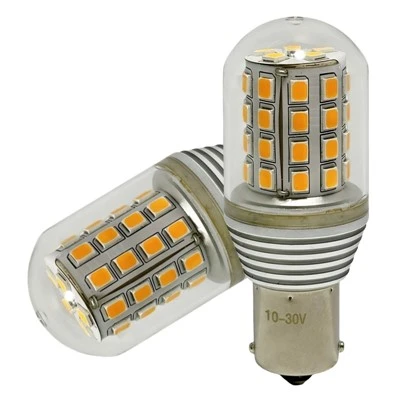
If you’ve got questions about base sizes, bulb types, or just want to restock on reliable T20 bulbs, don’t hesitate to reach out for a chat. We’re here to help make sure you get the right bulb, first time, every time.
LED Headlight References:
SAE International. “Light Bulb Standards for Automotive Signaling Devices.” SAE J575, 2022.
ANSI. “American National Standard for Lamp Caps and Bases.” ANSI C81.1, 2021.
International Electrotechnical Commission. “Lamp Caps – Dimensions and Designations.” IEC 60061-1, 2020.
BULBPLAN Co., Ltd.
As one of the most professional t20 bulb manufacturers and suppliers in China, our products have good reputation in the market. Please feel free to wholesale cheap t20 bulb for sale here and get pricelist from our factory. Quality products and reasonable price are available.
Address: No. 86 Zhongli Road, Nancheng Street, Dongguan City, Guangdong Province
E-mail: Alex@bulbplan.com
WebSite: https://www.nicebulbs.com/
