When I’m out meeting plant managers, process engineers, and operations directors across multiple industries, the number one question I hear is always the same: how do we squeeze more efficiency out of our CO₂ plant without sacrificing product quality or, even worse, breaking our budgets? As someone who’s been supplying CO₂ processing equipment for the better part of 12 years, I’ve seen firsthand that efficiency gains don’t come from flashy one-time overhauls—they come from small, intentional, data-driven tweaks that work with your existing setup, not against it. This isn’t just about reducing energy bills, either; it’s about cutting downtime, extending equipment lifespan, and making your entire operation more reliable, week in and week out. CO2 Plant

First, let’s ground this in the core science of how most industrial CO₂ plants work. Whether your plant captures CO₂ from fermentation (think breweries or biofuel refineries), produces it as a byproduct of ammonia synthesis, or pulls it directly from raw natural gas streams, the process follows a similar rough outline: raw CO₂ is compressed, purified to remove impurities like water, nitrogen, or methane, then chilled and liquefied for storage or distribution. Every step in that chain has a point where energy and material are wasted, and those are the low-hanging fruit that too many teams overlook.
Let’s start with compression systems, the single biggest energy drain in any CO₂ plant—often accounting for 60 to 70% of total operational costs. I’ve walked into plants where operators just run their compressors at full capacity 24/7, regardless of how much raw CO₂ is coming in that day. That’s a mistake. Modern compressor controls, if configured and calibrated correctly, can trim 10 to 15% off your annual energy use just by matching load to demand. For example, variable frequency drives (VFDs) aren’t a new technology, but I still see plants running fixed-speed compressors because they’re “what we’ve always used.” When we retrofit VFDs to reciprocating and centrifugal compressors during a recent project for a food-grade CO₂ plant in the Midwest, their energy bills dropped by 12% in the first quarter, and they saw less wear and tear on compressor parts because compressors no longer cycle on and off as frequently.
But it’s not just adding VFDs—it’s maintaining the compression system to keep it running at peak efficiency. I’ve visited plants where compressor valves were 30% clogged with carbon deposits, which forces the unit to work harder to move the same volume of gas. A lot of operators schedule valve replacements based on a rigid calendar, not actual performance data. A simple daily check of compressor discharge pressure and flow rate can catch clogging early, letting you clean valves before they cause a 5% efficiency loss—or, worse, an unplanned shutdown during a peak production window. We also recommend regular alignment checks for shaft bearings; even a 0.1 degree misalignment can add 8% extra energy use to a compressor over time. Small, regular maintenance checks here pay off way more than waiting for a major failure.
Next, purification and drying stages. Raw CO₂ almost never comes in pure enough for industrial use—whether you’re selling it for carbonated beverages, enhanced oil recovery, or greenhouse food production, you need to remove water, volatile organic compounds (VOCs), and other trace contaminants that can ruin the end product and clog downstream equipment. What many teams don’t realize is that the drying process, which usually uses molecular sieves, is another area with massive inefficiencies. Traditional pressure swing adsorption (PSA) drying cycles are often set at fixed times, regardless of the moisture content in the incoming raw gas. If your feed gas is particularly dry one day, you don’t need to run the regeneration cycle as long—but most plants run it for the same 15 minutes every time. Adjusting cycle length based on real-time moisture sensors can cut regeneration energy use by up to 20%, because you’re not wasting heat to reactivate sieves that don’t need it.
We also see a lot of plants reusing heat from compression stages to power the drying process, which is a win that almost pays for itself in a year. When compressors run, they generate a lot of excess heat that’s usually vented to the atmosphere. Instead, you can pipe that waste heat to the sieve regeneration system, which typically uses steam or electric heaters. A brewery plant I supply integrated that heat recovery system two years ago, and they eliminated 90% of the steam they used for drying. That’s not just efficiency—it’s a direct cost cut that falls straight to their bottom line. Just make sure you insulate all your process piping, too; heat loss from uninsulated lines can add 3 to 5% extra energy use across the entire plant, and insulation is a cheap, quick upgrade that almost every plant can benefit from.
Then there’s liquefaction and storage. Once CO₂ is purified, it needs to be cooled to around -109°F (-78°C) to turn from a gas into a liquid, which is how it’s stored in large bulk tanks. Refrigeration systems for liquefaction are another major energy user, so optimizing here is key. A common mistake is running the refrigeration system at a fixed set point, even if ambient temperatures drop at night. In regions with wide day-night temperature swings, adjusting the refrigeration condensing pressure to match lower ambient temperatures can cut energy use by up to 10%, because the system doesn’t have to work as hard to reject heat. We work with plants to install ambient temperature sensors that automatically adjust condensing pressure; it’s a simple control tweak, but the savings add up, especially in hot summer months when refrigeration demand peaks.
I also encourage teams to monitor their storage tank levels closely. Too often, operators leave vapor recovery systems running even when tanks are full, wasting liquid CO₂ that could be shipped out. A real-time level sensor integrated with your plant’s control system can cut off vapor recovery once tanks hit 95% capacity, preventing unnecessary venting and loss of product. For smaller plants, that’s a few thousand dollars a month in lost product; for larger facilities, it’s tens of thousands.
Beyond equipment tweaks, operational training plays a huge role in efficiency. I’ve seen plants with top-of-the-line equipment run at 20% below its potential just because operators don’t know how to adjust controls or interpret performance data. Last year, we launched a free 3-day training program for the plant teams we supply, focused on real-time monitoring and process optimization, and the feedback was unanimous: operators who learned to track compressor discharge rates, sieve moisture levels, and refrigeration pressure could identify and fix small inefficiencies before they turned into big problems. One plant in Texas reported that after training, their team was able to adjust their purge gas flow rate by 15%, cutting another 7% off their total energy use—all without buying any new equipment.
It’s also important to invest in regular performance audits. A lot of plant managers only check their efficiency when their energy bill goes up, but a third-party audit (or even a self-audit using standardized process data) can uncover hidden inefficiencies you didn’t know existed. For example, a plant in the Pacific Northwest we audited found that their feed gas line was leaking 2% of raw CO₂ every day—small leaks that added up to 7% of their total production loss. Fixing those leaks cost less than $5,000, and they recouped that cost in two months from the extra product they gained.
I will be honest, there’s no one “magic” solution to making a CO₂ plant more efficient. What works for a fermentation-based brewery won’t work for a natural gas processing plant, and vice versa. That’s why we work with each of our clients to tailor efficiency improvements to their specific setup, instead of pushing a one-size-fits-all package. For a small craft brewery with a single CO₂ generator, we might start with a VFD retrofit and a heat recovery system. For a large-scale industrial plant processing 100 tons of CO₂ a day, we might look at upgrading purification controls and adding a predictive maintenance program for compressors and refrigeration units.
The key takeaway here is that efficiency is an ongoing process, not a one-time project. Technology evolves, feed gas purity changes, and production demand shifts—so your operations should adapt with it. Skipping small maintenance checks, running old controls, or ignoring waste heat might save you a little time in the short term, but it will cost you far more in energy bills, product loss, and downtime down the line.
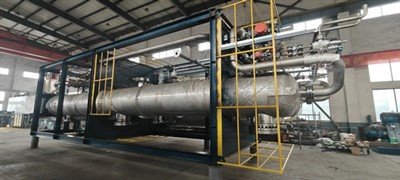
If you’re looking to get a better handle on your CO₂ plant’s efficiency, or you’re considering upgrades that actually deliver measurable savings, I’m here to help. We’ve worked with hundreds of plants across the country, from small craft operations to large industrial facilities, to design and implement efficiency improvements that fit your budget and goals.
Air Separation Unit References
- Gas Processors Suppliers Association. (2020). Engineering Data Book, 15th Edition: Carbon Dioxide Processing and Separation.
- U.S. Department of Energy. (2021). Industrial Compressor Systems: Energy Optimization Guide.
- International Energy Agency. (2022). Industrial Energy Efficiency: Best Practices for CO₂ Capture and Processing Facilities.
- American Society of Mechanical Engineers. (2019). Process Equipment Maintenance and Efficiency for Gas Processing Plants.
- Food and Agriculture Organization of the United Nations. (2020). CO₂ Handling and Processing for Food and Agricultural Applications.
Hanturbo Technology (Zhejiang) Co., Ltd.
Hanturbo Technology (Zhejiang) Co., Ltd. is one of the most professional co2 plant manufacturers and suppliers in China, also supports custom service. We warmly welcome you to buy discount co2 plant made in China here and get quotation from our factory. For price consultation, contact us.
Address: No.118, Wangluo Road, Deqing County, Huzhou City, Zhejiang Province, China.
E-mail: andyxu@hanturbo.com.cn
WebSite: https://www.hanturbo-gas.com/
