Hey everyone, it’s Jake from the reverse osmosis team here. If you’ve ever dabbled in seawater desalination—whether you’re a plant operator, a small-scale system builder, or just someone who’s had to troubleshoot a wonky RO unit that won’t push enough water—you’ve probably stared at the pressure gauge and thought, “Wait, is this reading right? Am I over- or under-pressuring my membrane?” Today we’re breaking down exactly what the optimal pressure for a seawater RO membrane is, no jargon overload, just real-world stuff I’ve picked up working with thousands of operators over the last 8 years. Sea Water RO Membrane
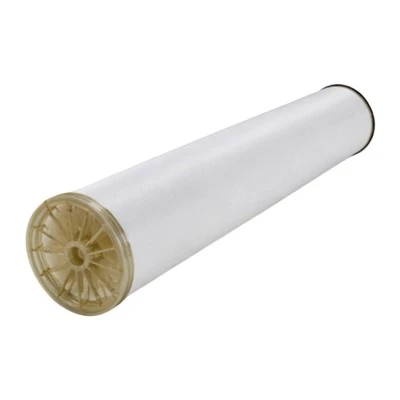
First off, let’s get one thing straight: seawater RO is not like that under-sink RO system you have under your kitchen counter. Those tiny ones run at like 50-75 psi, max. Seawater has salt—tons of it—so you need way more push (that’s pressure, duh) to force water through the membrane and leave the salt behind. But pressure isn’t just a number you pick out of thin air. It’s a balance, and if you get it wrong, you’re either wasting electricity (and money) or killing your membrane way faster than it should last.
Let’s start with the basics that matter here: osmotic pressure. Every solution has this—seawater’s osmotic pressure is roughly 270 psi, right? Wait, but that’s just the minimum to even start reversing the natural osmosis process. But that’s not your operating pressure. Because you also have to account for friction from the water moving through the piping, the pressure drop across the membrane elements, and even the way salt concentration builds up right at the membrane surface (that’s called concentration polarization, don’t overthink the name, just know it adds to the pressure you need).
Now, what’s the actual sweet spot? For standard seawater RO membranes (the ones we supply for most commercial and municipal plants), we’re talking 800 to 850 psi. Wait, hold on—some people run a bit lower, like 750, and some push 900. Why the range? It all depends on the water temperature, the salt content of the seawater (yes, some coastal areas have saltier water than others—like the Red Sea is way saltier than the Gulf of Mexico, for example), and how old your membrane is. Oh, and important: that’s net driving pressure (NDP), not the raw pressure at the pump. The pump pressure minus the pressure drop across the elements and the osmotic pressure gives you NDP. Most operators forget that, and end up thinking they need 900 psi when their actual net is way too low.
Let’s talk about why hitting that 800-850 psi NDP is non-negotiable. If you run too low—say, 700 psi—what happens? The water moves through the membrane super slow, so you get less product water, and that concentration polarization I mentioned gets way worse. Salt builds up on the membrane surface, and that can lead to scaling—think calcium carbonate, magnesium sulfate, all that gunk that sticks to the membrane and clogs it. Scaling is the #1 reason membrane replacements get rushed, and it’s totally avoidable if you keep pressure where it needs to be. Plus, low pressure means you’re not using the membrane’s full capacity, so you’re wasting that investment you dropped on new membranes.
Now, if you run too high—like over 900 psi—you’re looking at two big problems. First, way higher electricity bills. RO pumps are energy hogs, and every extra 50 psi can add 5-10% to your power costs. That’s thousands of dollars a month for a mid-sized plant. Second, too much pressure can actually damage the membrane structure. Seawater RO membranes are thin, and constant over-pressure can stretch them, tear the polymer layer, or even break the spacers between elements. We’ve seen customers who cranked pressure to 1,000 psi “just to get more water” end up replacing their membranes 6 months early instead of their usual 3-5 year lifespan. That’s a way costlier mistake than a slightly lower production rate.
Wait, but what about water temperature? Oh right, seawater temp changes with the seasons. In the winter, when water is cold, it’s thicker, so it needs more pressure to move through the membrane. We usually add 1-2 psi for every degree Celsius drop below 25°C (77°F). So if your seawater is 20°C (68°F) in January, you’d bump your operating pressure up by 5-10 psi to keep that NDP at 800-850. In the summer, when it’s 30°C (86°F), you can drop 5-10 psi. That’s a quick fix I give all new customers when they call in panicking about low flow in winter.
And don’t sleep on salt content. As I said, seawater salinity varies. For example, the Dead Sea has like 10x more salt than average seawater, so osmotic pressure there is way higher—so you need to bump operating pressure up to 1,000-1,100 psi. But that’s for specialized membranes, not the standard ones we supply for normal coastal seawater. If you’re in an area with higher salt, we can help you size that, don’t guess.
Let me throw in a real example from last year to make this concrete. We had a customer in Florida who was running their standard seawater RO at 720 psi, convinced it was working because it was producing some water. But their flow was 20% lower than their design, and they were having scaling issues every 3 months. We checked their pressure gauge and calculated their NDP: it was only 620 psi. We adjusted the pump to get them to 820 psi net, and their flow jumped back to design, scaling went away, and their power use didn’t even go up that much. They saved almost $12k a year on electricity and didn’t need to replace membranes as often. That’s the difference between knowing the right pressure and guessing.
Another common myth: “higher pressure always gives more water.” Yeah, up to a point. Once you hit that optimal NDP, any extra pressure gives minimal gains. Let’s do the math: if you go from 800 to 900 psi raw pressure, you might get 5-10% more water, but you’ll use 15% more electricity, and cut your membrane life by half. That’s a terrible ROI. I tell all our customers: treat pressure like a sweet spot, not a maximum.
So how do you actually set the pressure correctly, step by step? Let’s keep this simple, no fancy software needed. First, get the average osmotic pressure of your local seawater (you can get this from local environmental data, or we can help you calculate it). Second, add pressure to account for temperature: 1-2 psi per °C below 25°C. Third, add 50-70 psi for pressure drop across your membrane elements and piping. Fourth, aim for a net driving pressure of 800-850 psi. That’s your operating pressure. Then, check it monthly—don’t just set it and forget it, because scaling or fouling will increase pressure drop over time, so you might need to bump up the pump a little to keep NDP in that range.
Wait, what about fouled membranes? If your membrane is already dirty, you might need to run a bit higher pressure to get the same flow, but that’s a band-aid. Don’t keep cranking it—clean the membrane first. Chemical cleaning is way cheaper than replacing a membrane that’s been damaged from over-pressure while fouled. We always tell customers: if pressure starts creeping up, check for scaling or biofilm before you adjust the pump.
I know a lot of operators are watching their budgets tight right now, so let’s talk cost. A standard 8-element seawater RO set might cost $15k-$20k. If you get 4 years out of it instead of 2, that’s $2.50 per day vs $5 per day, huge difference. Running at optimal pressure means better product water quality too—since concentration polarization is lower, your salt rejection goes up, so your water meets all regulatory standards without extra polishing steps. That’s another cost saver.
One last thing: not all seawater RO membranes are the same. We design our membranes to perform best at 800-850 psi NDP, so if you’re using a different brand, their sweet spot might be slightly different. That’s why when we supply membranes, we give customers a custom pressure spec sheet based on their exact system and local water conditions. No one-size-fits-all here, but 800-850 is the baseline for standard seawater.
At the end of the day, optimal pressure isn’t just a number on a gauge—it’s the sweet spot that balances performance, cost, and membrane lifespan. Too low, you waste money on power and damage membranes from scaling. Too high, you waste money on power and kill membranes early. Hit that 800-850 psi NDP, adjust for temperature and local salinity, and check it regularly.

If you’re struggling with pressure settings, seeing low flow, or worried your membranes are underperforming, we’re here to help. We’ve worked with all kinds of desalination systems, from small coastal resorts to municipal plants, and we can give you tailored advice on pressure specs, maintenance, and membrane performance. Hit us up to chat through your needs, no sales pitch, just real help from people who know this stuff inside and out.
Urea Purification Membrane References:
- M. Wilf, L. Awerbuch, “The Guidebook to Membrane Desalination Technology,” Balaban Desalination Publications, 2007.
- K. W. Lawson, D. R. Lloyd, “Role of Concentration Polarization in Desalination by Reverse Osmosis,” Journal of Membrane Science, vol. 120, no. 1, pp. 1-25, 1996.
- A. F. Ismail, M. H. D. Othman, “Seawater Reverse Osmosis (SWRO) Membranes: Materials, Performance, and Applications,” Desalination and Water Treatment, vol. 51, no. 19-21, pp. 3791-3805, 2013.
Fujian Huamo Technology Co., Ltd.
Fujian Huamo Technology Co., Ltd. is one of the most professional sea water ro membrane manufacturers and suppliers in China, featured by quality products and good service. Please rest assured to wholesale the best sea water ro membrane made in China here and get price list from our factory. Contact us for custom service and OEM service.
Address: No.6 Hengtong Rd, Shanmei Village, Xiamei Town, Nanan City, Fujian Province, China
E-mail: info@huaromembrane.com
WebSite: https://www.hmromembrane.com/
