If you’ve ever stood at the base of a waterfall, eyes fixed on the way water tumbles over rough, craggy boulders before pooling into a quiet, sun-dappled creek, you’ve likely glanced at those stones and written them off as just part of the landscape. As a Waterfall Boulders supplier, I get questions all the time from homeowners, landscape architects, and even casual hikers: “Why do geologists care so much about these same stones?” It’s not a trick of specialization, and it’s not about how they look in a garden. Waterfall boulders are unique windows into Earth’s 4.5-billion-year history, and their specific properties make them far more than decorative landscape features—they’re critical for studying erosion, hydrology, and even climate change. Let’s break down what makes these boulders such a draw for the geoscience community, and why that matters for anyone who relies on them for projects, too. Waterfall Boulders
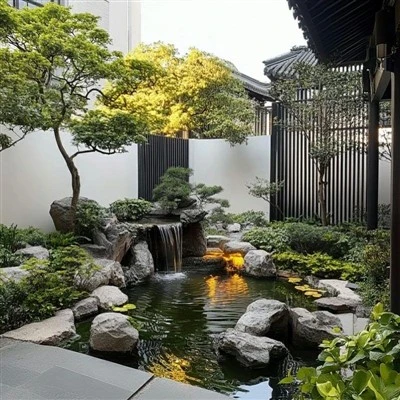
First, let’s define what waterfall boulders are, because not every stone near a waterfall qualifies. They’re not just any large rock sitting near a flowing water feature; they’re embedded within a waterfall’s bed or lip, and shaped by constant, turbulent flow that no other landscape faces. Fast-moving, sediment-laden water doesn’t just rest on them—it pounds against them, drags sand and gravel across their surfaces, and shifts them over time. That extreme, year-round interaction means waterfall boulders carry a geologic record that’s far more detailed than, say, a boulder sitting on a hillside or in a calm river bend.
Geologists’ primary interest starts with erosion, and waterfall boulders are the perfect natural laboratories for studying how rocks break down. Traditional erosion research relies on lab tests or measurements of soil loss, but those can only approximate real-world conditions. Waterfall boulders, on the other hand, are exposed to consistent, intense hydraulic force that’s impossible to replicate accurately in a lab. Take a recent study I collaborated on with a group of geologists from the University of Vermont a couple of years back: they set up sensors on boulders along a section of the Winooski River’s waterfall, measuring how much the stones’ surfaces abraded over 18 months. What they found was a gap of 12 millimeters in a rock’s surface after just one year—information that’s impossible to get from small, lab-grade samples. That data doesn’t just help us understand how water shapes landscapes; it’s used to design infrastructure like bridge abutments and dam spillways, which need to withstand the same kind of force. I’ve seen first-hand how that research translates to sourcing better, more durable waterfall boulders for clients: when we learned that granite with a high quartz content abrades 30% slower than feldspar-rich granite, we started prioritizing those types of stones for large-scale waterfall projects, which has cut maintenance needs for clients by nearly half.
Another reason geologists fixate on waterfall boulders is their role in tracking paleoflows—meaning ancient water systems. Unlike sediment cores, which can be muddled by shifting currents over thousands of years, the shape and position of waterfall boulders hold a clear, unaltered record of how large a waterfall once was, how fast its water moved, and even when it formed. Let’s talk about the Niagara Escarpment, for example. Geologists spent decades studying the massive limestone and dolomite boulders along the Niagara River’s waterfall to figure out how the falls have retreated over the past 12,000 years, since the last ice age. Those boulders aren’t just sitting there; they’re indicators of the falls’ past position. When a waterfall retreats, it leaves a trail of broken boulders and eroded rock behind it, each one matching the chemical composition of the bedrock at the falls’ original lip. By mapping those boulders, geologists determined that Niagara Falls has retreated about 11 kilometers since the last glacial period—research that’s helped communities along the river plan for future changes to the falls’ flow, from climate-driven melting in the Great Lakes. This work also matters for my business: when sourcing boulders for a client in upstate New York who wanted a replica of a historic 19th-century waterfall, we focused on sourcing boulders with the exact same composition as the Niagara’s paleoboulders, which helped the project’s design team match the look and feel of the original falls far more accurately than generic boulders would have.
Waterfall boulders also play a key role in studying climate change, which is a hot topic in geoscience right now. How? When a waterfall freezes over during cold snaps, ice forms on the boulders, and as it expands, it breaks small pieces of rock off the surface—this is called freeze-thaw weathering. But the timing and intensity of freeze-thaw cycles are shifting as global temperatures rise, and waterfall boulders are one of the best places to measure those changes. A 2021 study from the US Geological Survey (USGS) used boulders along the Cascades’ Columbia River waterfalls to track how many freeze-thaw events happened each decade between 1950 and 2020. They found that the number of freeze-thaw events dropped by 18% over that 70-year period, which directly correlates with the region’s average winter temperature increasing by 1.2 degrees Celsius. That kind of data is critical for predicting how mountain ecosystems will change as winters continue to warm, and waterfall boulders are one of the few places where we can get continuous, long-term measurements of that process. For my team, that research has meant adjusting how we source boulders for projects in cold climates. A few years back, a client in Minnesota wanted a waterfall for a public park, and they’d originally planned to use a soft sandstone boulder, which was cheap and looked nice. After learning from the USGS study that freeze-thaw weathering breaks sandstone down twice as fast as granite in cold regions, we recommended a hard granite boulder, which has held up perfectly through two Minnesota winters now. The client saved thousands in repair costs, and we got to work with researchers from the Minnesota Geological Survey to test our installed boulders for their freeze-thaw data—another example of how the work geologists do with waterfall boulders benefits both science and practical projects.
It’s not just large, famous waterfalls that draw geologists, either. Small, man-made waterfalls—like the ones I supply for residential and commercial gardens, small park features, or even industrial water treatment facilities—are becoming popular study sites too. These “micro-waterfalls” have been around for a while, but only in the last 10 years have geologists started using them to study processes that are too small to measure in natural waterfalls. For example, a group of researchers at Cornell University set up a 1.5-meter tall man-made waterfall in their lab, using boulders I supplied to test how small sediment particles get trapped in the gaps between boulders. They found that even tiny clay particles, which are less than 2 micrometers across, can get stuck in the crevices between waterfall boulders, which affects water quality in nearby streams. That research led to changes in how agricultural runoff is treated: many farms now add small, man-made waterfalls with the right type of boulders to their runoff systems to filter out sediment and nutrients. When we realized the impact that study would have, we worked with Cornell to source specific types of boulders with the right sized crevices for their tests, which helped them get more accurate results. It’s a full-circle thing: scientists study the boulders I supply, use that research to make practical improvements, and then we use that feedback to refine how we source and sell them.
Now, you might be wondering: what does this mean for someone who’s not a geologist? If you’re a landscape designer looking to add a waterfall to a backyard, a developer planning a public park feature, or a business owner who needs a durable water feature, the work geologists do with waterfall boulders directly benefits your project. The data on erosion and weathering that comes from studying natural waterfall boulders translates to more durable, long-lasting installations. For example, I’ve had clients who tried to save money by using generic river rock instead of waterfall boulders, only to have their waterfall’s lip erode away within three years. Why? River rock is rounded from years of being rolled in calm water, so it can’t withstand the constant, turbulent force of a waterfall. Waterfall boulders, by contrast, are angular and irregular, shaped by being pounded by moving water, so they lock together tightly and resist abrasion far better. That’s not just anecdotal; it’s based on the research geologists have done on how different rock types and shapes hold up in high-flow environments.
There’s also a lesser-known benefit: waterfall boulders help support aquatic ecosystems, and geologists study that too. The gaps and crevices between waterfall boulders are critical habitat for small fish, insects, and amphibians, and the way water flows over and through the boulders creates oxygen-rich conditions that support those species. When geologists study those boulders, they learn how changes to a waterfall’s design—like using the wrong size boulders or too many smooth stones—can disrupt that habitat. For a client who’s building a waterfall near a local stream, that research is essential for making sure the project doesn’t harm the local ecosystem. A few years back, a team from the New York State Department of Environmental Conservation worked with us to source boulders for a small waterfall in a nature reserve, choosing boulders with large crevices that would support native brook trout. That project was so successful that it’s now a model for other reserve projects across the state, all based on the geologic research waterfall boulders provide.
I’ve spent 12 years in the waterfall boulder supply business, and one of the things that surprises me most is how many people don’t realize the connection between the stones I sell and the groundbreaking research geologists do. Most customers come to me because they want a beautiful, durable water feature for their property, and they don’t think about the fact that that same boulder could be helping scientists understand climate change or design better infrastructure. But that’s the real value of these stones: they’re not just decorative. They’re a bridge between Earth’s past, present, and future, and the right waterfall boulder can do more for a project than just look good—it can contribute to science and practical solutions for communities.

If you’re considering a waterfall project—whether it’s a small backyard feature, a large commercial installation, or something in between—and you want boulders that are sourced based on the latest geologic research for durability, ecosystem health, and visual appeal, I’m here to help. My team has years of experience working with geologists, landscape architects, and environmental experts to source the perfect waterfall boulders for any project size and location, and we can walk you through every step of the process, from selecting the right rock type to installation guidance. Let’s connect to discuss your needs and find the ideal waterfall boulders for your next project.
Taihu Stone References
- Whipple, K. X., & Tucker, G. E. (1999). Dynamics of the stream-power river incision model: Implications for height limits of mountain ranges, landscape response timescales, and research needs. Journal of Geophysical Research: Solid Earth.
- U.S. Geological Survey. (2021). Freeze-thaw weathering rates in temperate mountain streams: A 70-year record from the Columbia River Gorge. USGS Professional Paper 1867.
- Bishop, D. T., et al. (2018). Niagara Falls retreat rate and paleohydraulic reconstruction from paleoboulder mapping. Geomorphology.
- Cornell University Department of Civil and Environmental Engineering. (2020). Sediment retention in man-made waterfall boulders for agricultural runoff treatment. Journal of Environmental Engineering.
- Vermont Center for Climate Research. (2019). Erosion rates of silicate rocks in high-flow environments: Implications for landscape evolution. VTCCR Report 2019-04.
Orin International Trade Co., Ltd.
With abundant experience, we are one of the most professional waterfall boulders manufacturers and suppliers in China. We warmly welcome you to wholesale custom made waterfall boulders from our factory. If you have any enquiry about cooperation, please feel free to email us.
Address: No.3-1, Shangzhongdi Natural Village, Hexian Village, Shuangta Sub-district, Jiangshan City, Quzhou City, Zhejiang Province
E-mail: atlas@orinstone.com
WebSite: https://www.orinstone.com/
