Yo, what’s up! I’m a supplier of niobium alloy, and today I wanna chat about the electrical properties of niobium alloy. It’s pretty fascinating stuff that affects a whole bunch of industries. Niobium Alloy

Let’s start with the basics. Niobium is a super cool metal. When you mix it with other metals to make niobium alloys, its electrical properties get even more interesting.
One of the key electrical properties of niobium alloy is its low electrical resistance. Niobium and its alloys are known for having relatively low values of resistivity. This is a game – changer in the world of electrical engineering. Low resistance means that when an electric current flows through a niobium alloy, there’s less energy loss in the form of heat. For example, in power transmission cables, using a material with low resistance can significantly reduce the amount of energy wasted during transmission. It’s like getting more bang for your buck. You can transfer more electricity with less loss, which is not only good for the environment but also for the bottom line of utility companies.
Another amazing thing about niobium alloy is its superconductivity. At extremely low temperatures, many niobium alloys can become superconductors. Superconductivity is just mind – blowing. In a superconducting state, the electrical resistance drops to zero. That means no energy is lost as heat when an electric current flows through the material. You might be thinking, "Why is this a big deal?" Well, it has a ton of applications.
In the medical field, magnetic resonance imaging (MRI) machines rely on superconducting niobium – titanium (Nb – Ti) alloys. These alloys are used to make the powerful magnets in MRI scanners. Since they have zero resistance in the superconducting state, they can carry huge electric currents for long periods without losing energy. This allows the MRI machine to generate strong and stable magnetic fields, which are essential for creating detailed images of the inside of the human body.
Particle accelerators are another area where the superconductivity of niobium alloy shines. In places like CERN, niobium – tin (Nb₃Sn) alloys are used to build the superconducting magnets that guide and accelerate subatomic particles. The zero – resistance property of these superconducting niobium alloys enables the creation of extremely strong magnetic fields, which are necessary to bend and speed up particles traveling at nearly the speed of light.
Niobium alloy also has excellent high – frequency electrical performance. In the telecommunications industry, high – frequency circuits are crucial for operations like 5G and satellite communications. Niobium – based alloys can handle high – frequency signals well because of their unique electrical properties. They have a high electron mobility, which means electrons can move easily through the material. This results in less signal distortion and better signal transmission at high frequencies. So, when you’re streaming that high – definition video on your 5G – enabled phone, niobium alloy might just be playing a part in making that smooth experience possible.
The behavior of niobium alloy in an electric field is also worth mentioning. It has a high dielectric constant in some cases. A high dielectric constant is useful in making capacitors. Capacitors are components that store electrical energy in an electric field. By using niobium alloy – based dielectrics, you can make smaller and more efficient capacitors. This is important in modern electronics, where miniaturization is a key trend. You want your smartphone to be as thin and light as possible, and high – performance niobium – alloy capacitors help achieve that by taking up less space while still providing the necessary energy storage.
Now, I know what you’re thinking. "This all sounds great, but how does this apply to my business?" Well, if you’re in the electronics, power generation, medical, or aerospace industries, niobium alloy could be a game – changer for you. Whether you’re looking to improve the efficiency of your electrical equipment, make smaller and better – performing components, or take advantage of superconductivity for high – end applications, we’ve got the niobium alloy solutions you need.
We offer a wide range of niobium alloy products. Our alloys are carefully formulated and manufactured to meet the highest standards. We have different grades and compositions to suit various applications. And we’re always working on research and development to improve the properties of our niobium alloys even further.
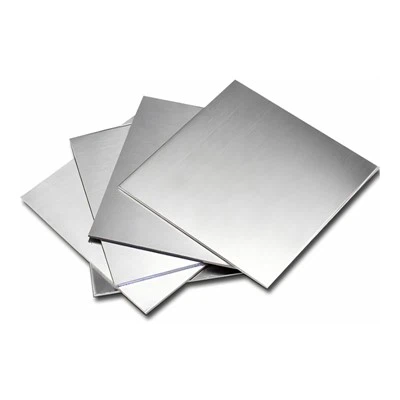
If you’re interested in learning more about our niobium alloy products or want to discuss a specific project, don’t hesitate to get in touch. We’re here to help you find the perfect niobium alloy solution for your needs. Reach out to us, and let’s start a conversation about how we can work together to take your business to the next level.
Tungsten Products References
- Kittel, C. Introduction to Solid State Physics. Wiley, 2005.
- Reed, R. C. The Superalloys: Fundamentals and Applications. Cambridge University Press, 2006.
- Sze, S. M. Physics of Semiconductor Devices. Wiley, 2006.
Address: Wangjing Science and Technology Park, Guangshun North Street, Chaoyang District, Beijing
E-mail: sales@moly-tungsten.com
WebSite: https://www.moly-tungsten.com/
