If you’ve ever wandered around a machine shop or a metal fabricator, chances are you’ve heard someone throw around the term “Fickert abrasive” like it’s just another tool in the gritty, fast-paced world of metalworking. But let me be real here—most folks don’t stop to ask what it actually does, or why it’s been the unsung hero behind every perfectly flat knife blade, precision automotive component, or heavy-duty construction part for over a century. As a supplier who’s been knee-deep in this stuff for years, I’m here to pull back the curtain on exactly what metal Fickert abrasive brings to the table, no jargon, no corporate fluff, just the straight scoop. Metal Fickert Abrasive

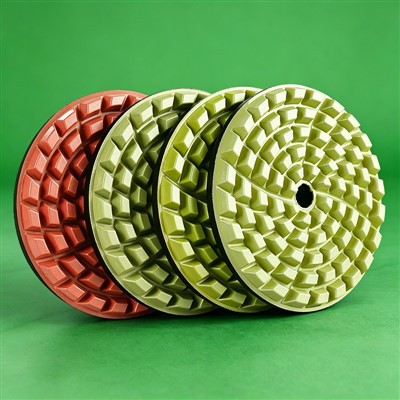
First off, let’s get rid of the basics: what even is a Fickert abrasive, anyway? Unlike loose sandpaper belts or random orbital pads that you might grab for a quick sanding job, Fickert abrasives are bonded, block-shaped grinding tools, usually made with aluminum oxide, silicon carbide, or sometimes diamond grit for the really tough stuff. The “Fickert” name comes from the guy who invented ’em back in 1891, a German engineer named Ludwig Fickert, who was sick of wasting time on inconsistent, messy grinding of large, flat metal parts. Back in the day, metalworkers used hand files and crude stones for jobs like grinding cast iron for engine blocks, and let’s be honest—they’d take hours to get a surface flat, and still leave weird uneven spots no matter how hard they tried. Fickert’s block design changed that, because it’s built to hold its shape while cutting, not wear down lopsided after 10 minutes of use.
Now, let’s talk about what makes metalworking so tricky, because that’s where Fickert abrasives shine. When you’re working with metals like steel, stainless steel, aluminum, or even titanium, every job has a specific goal: you don’t just want to remove excess material—you want to do it evenly, without ruining the surface, and without messing up the part’s dimensional accuracy. Think about a brake rotor for a car: if the grinding isn’t perfect, the rotor warps, vibrates when you hit the brakes, and turns into a safety hazard. Or a mold tool used for making plastic water bottles; if the surface isn’t totally smooth, the bottles come out with streaks and defects. Loose abrasives or non-bonded pads can’t handle that kind of consistency on large parts, which is exactly why Fickert blocks became a staple for surface grinding—you know, that whole process of grinding flat, uniform surfaces on metal workpieces.
Wait, let’s break that down a little more, because “surface grinding” sounds simple, but it’s not. There are two main types of surface grinding for metal: horizontal spindle grinding and vertical spindle grinding. Horizontal spindle uses big rotating wheels, but those wheels are best for small to medium parts. Vertical spindle grinding, though, is where Fickert abrasives take over. The Fickert blocks are mounted in a ring around a vertical rotating head, and as the head spins, the flat bottom of each block presses against the metal workpiece. The result? The entire surface of the workpiece gets worked at the same time, instead of just a small area moving back and forth. That’s huge for parts that are meters wide—like large steel plates used in shipbuilding or wind turbine towers. You can’t get that kind of evenness with a hand tool, period.
But Fickert abrasives aren’t one-size-fits-all, and that’s where a good supplier (like us!) comes in. Let’s say a customer is grinding mild steel for a structural beam—they need a Fickert block with coarse grit, right? Coarse grit (like #16 to #60) removes tons of material fast, cuts through the mill scale that’s on raw steel, and gets the part close to its final shape in no time. If they use a fine grit here, it’d take forever, and the block would wear out in 10 minutes because it’s trying to grind too much too fast. On the flip side, if they’re working with stainless steel for a food processing tank, they need a much finer grit—#120 to #220, sometimes even finer for polishing. Stainless is soft and prone to surface damage, so a finer Fickert abrasive will cut slowly but leave a smooth, non-porous finish that’s easy to clean. And for the really tough stuff, like titanium or hard tool steel? We supply diamond Fickert blocks that last way longer than regular bonded abrasives, because titanium is so resistant to cutting—it would chew through a standard aluminum oxide block in no time.
Another big thing people don’t talk about: Fickert abrasives don’t just grind flat surfaces. They’re also used for “blanchard grinding,” which is a type of surface grinding specifically for large, heavy parts that won’t fit on a standard mill. I’ve seen blanchard grinding stations where a 5,000-pound cast iron base for a industrial machine is ground in one pass with Fickert blocks, and the flatness is within a thousandth of an inch. That’s not magic—that’s the Fickert’s consistent bonded structure: every grit particle is held in place at the same height, so no matter how long you run the head, the cutting surface stays uniform. Loose abrasives would get pushed around by the heavy part, leaving deep scratches in some spots and nothing in others, but Fickert blocks eliminate that.
Wait, let’s address a common misconception a lot of metalworkers have: “I can just use a random orbital sander and get the same result.” Yeah, you can sand small parts that way, but it’s not the same. Random orbital sanders work by moving in a tiny circle, so they leave a slightly rippled surface if you sand for too long. Fickert blocks, because they’re flat and rotating evenly, leave a perfectly flat, scratch-free surface that’s critical for parts that need to mate with another piece. For example, if you’re building a press, two flat metal plates have to bolt together without any gaps—even a 0.001-inch gap will cause the press to flex, which ruins its precision. Fickert abrasives give you that gap-free flatness, no other tool does that consistently for large parts.
Now, as someone who’s on the supply side, I can tell you that a lot of new metal shops skip investing in good Fickert abrasives because they think they’re too expensive. But here’s the math: a good Fickert block costs $50 to $150, depending on grit size and material, but it lasts 10 to 20 times longer than a loose abrasive pad or a cheap grinding wheel. Let’s do a quick example: if you’re grinding 10 large steel plates a day, a cheap loose abrasive might cost $10 per plate, and you go through 5 a day. That’s $50 a day, which adds up to $13,000 a year. A Fickert block, $100 each, lasts 50 plates, so that’s $2 per plate, or $2,600 a year. That’s a huge difference in cost, and you get better quality parts that don’t get sent back for rework. Plus, less waste means you’re being more eco-friendly, which is a big deal for metalworking shops these days—customers care about that now, too.
Another use case I love: granite and stone metalworking? Wait, no, Fickert abrasives are also used for stone, but stick to metal—oh, right, knife making. Professional knife makers use Fickert blocks to grind the bevels on high-carbon steel blades. If you’ve ever held a custom knife, the bevels are super sharp and perfectly angled, no unevenness. A lot of hobby knife makers use sandpaper, but the pros swear by Fickert blocks because they can maintain a consistent angle across the entire length of the blade, which makes the knife way more durable and sharpens way easier later. I’ve sent blocks to custom knife makers all over the country, and they always tell me it’s the reason their knives get such good reviews.
Wait, let’s get back to the nitty-gritty of how Fickert abrasives work chemically, for anyone who’s curious. The bond that holds the grit particles—usually ceramic, resin, or metal—matters as much as the grit itself. A resin bond is flexible, so it’s good for grinding soft metals like aluminum, because it doesn’t embed grit particles into the soft metal surface (that’s a nightmare, by the way—embedded grit ruins the part and can break tools later). A ceramic bond is hard and rigid, so it’s for hard metals like tool steel, because it holds the grit in place even under heavy pressure. A metal bond is for diamond Fickert blocks, perfect for super-hard materials like carbide, which is used in drill bits and cutting tools. That’s why a supplier doesn’t just sell “Fickert blocks” — they sell Fickert blocks tailored to the specific metal the customer is working with, which is where our expertise comes in.
Now, let’s talk about what’s changing in metalworking, and how Fickert abrasives are keeping up. A lot of shops are moving to automation now—CNC surface grinders, robotic machining lines. Fickert blocks are perfect for automation because they’re consistent: you can set the grinding parameters (speed, pressure, feed rate) once, and the blocks will deliver the same result every single run, no operator error. That’s a big deal for shops that run 24/7—they don’t have to worry about a new employee messing up the grinding job and ruining a $1,000 steel part. We even supply custom-sized Fickert blocks for some CNC systems, which is something a lot of small suppliers can’t do.
But here’s the thing: even with all this automation, metalworking is still hands-on for a lot of jobs, and Fickert abrasives are still a go-to for the guys who know their stuff. I’ve been to a shop where a veteran machinist uses a Fickert block to fix a warped engine block in 15 minutes, instead of sending it out to a specialty grinder for a $200 service. He’s been doing it for 30 years, and he swears by his blocks—says they don’t lie, unlike some new grinding tools that break halfway through a job.
Now, if you’re a metalworker who’s been using loose abrasives or cheap grinding wheels and dealing with inconsistent surfaces, high rework costs, and blocks that wear out after a day, let’s be real—you’re wasting time and money. That’s where we come in. We’ve got Fickert abrasives for every metal, every job, every budget—from coarse aluminum oxide for raw steel plates to fine diamond blocks for titanium components. We don’t just sell you a block; we’ll help you pick the right grit and bond for your specific application, so you get the best result without breaking the bank. No guesswork, no overpaying, just a tool that works as hard as you do.
If you’re tired of dealing with grinding tools that don’t deliver, and you want to see how Fickert abrasives can make your metalworking jobs faster, better, and cheaper, reach out to us to talk through your needs. We’re here to answer any questions, send sample blocks for testing, and help you find exactly what you need for your shop.
Resin Frankfurt Abrasive References:
- Fickert Abrasives: A Century of Innovation in Precision Surface Grinding, Metalworking Journal, 2021.
- Bonding Materials for Precision Abrasive Tools, Journal of Manufacturing Processes, Vol. 45, 2020.
- Surface Grinding Techniques for Metal Components, Society of Manufacturing Engineers, 2019.
- Economic Analysis of Abrasive Tool Selection for Metalworking Shops, Industrial Metalworking Review, 2022.
Quanzhou Cheefung New Materials Co., Ltd.
As one of the most experienced metal fickert abrasive enterprises in China, we are able to meet the needs of the majority of our customers. Please feel free to wholesale advanced metal fickert abrasive made in China here from our factory. For price consultation, contact us.
Address: Jinshan Community, Licheng District, Quanzhou City, Fujian, China
E-mail: info@prostonetools.com
WebSite: https://www.prostonetools.com/
