Hey there! As a supplier of high precision vertical machining centers, I often get asked about how to pick the right type of high – precision toolholders. It’s not an easy task, but I’m here to break it down for you in simple terms. High Precision Vertical Machining Center
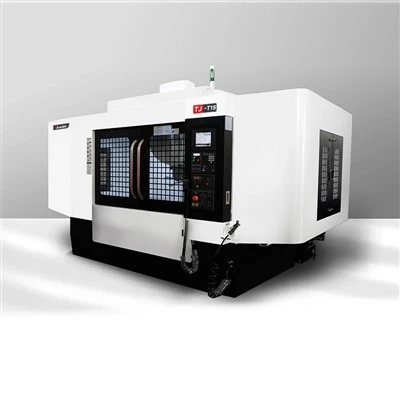
First off, let’s talk about why choosing the right toolholder is so important. A high – precision vertical machining center is a powerful piece of equipment, but it’s only as good as the toolholder it uses. The toolholder is what connects the cutting tool to the machine spindle, and it plays a crucial role in determining the accuracy, surface finish, and overall performance of the machining process. If you choose the wrong toolholder, you could end up with poor quality parts, increased tool wear, and even machine breakdowns.
Consider the Machining Requirements
The first thing you need to do when choosing a high – precision toolholder is to look at your machining requirements. What kind of materials are you going to be machining? Different materials have different properties, and you’ll need a toolholder that can handle them. For example, if you’re machining hard metals like titanium or stainless steel, you’ll need a toolholder that can provide high clamping force to prevent the tool from slipping during the cutting process. On the other hand, if you’re machining softer materials like aluminum or plastics, you might be able to get away with a toolholder with a lower clamping force.
Another important aspect of machining requirements is the type of operation you’ll be performing. Are you doing roughing or finishing cuts? Roughing cuts usually involve removing a large amount of material quickly, so you’ll need a toolholder that can handle high cutting forces. Finishing cuts, on the other hand, require high accuracy and a good surface finish, so you’ll need a toolholder that can provide precise positioning and minimal runout.
Spindle Compatibility
The next thing to consider is the compatibility of the toolholder with your machine’s spindle. Different high – precision vertical machining centers have different spindle designs and specifications, and you need to make sure that the toolholder you choose is a perfect fit. This includes things like the taper size of the toolholder. Common taper sizes include BT, CAT, and HSK. The taper size must match the spindle taper of your machining center to ensure a secure and accurate connection.
You also need to consider the interface between the toolholder and the spindle. Some modern toolholders use hydraulic or shrink – fit technology, which can provide extremely high clamping forces and low runout. However, these types of toolholders might require special equipment for tool installation and removal. Make sure your machining center has the necessary capabilities to handle the type of toolholder interface you choose.
Toolholder Design Features
There are several design features of high – precision toolholders that can have a big impact on their performance. One of these features is the clamping mechanism. There are different types of clamping mechanisms available, such as collet chucks, hydraulic chucks, and shrink – fit chucks.
Collet chucks are a popular choice because they’re relatively inexpensive and easy to use. They work by using a collet to grip the tool, and they can provide good clamping force over a range of tool diameters. However, they might not be the best choice for applications that require extremely high accuracy or high cutting forces.
Hydraulic chucks, on the other hand, use hydraulic pressure to clamp the tool. They can provide very high clamping forces and low runout, making them ideal for high – precision machining. However, they can be more expensive and require a bit more maintenance than collet chucks.
Shrink – fit chucks use thermal expansion to clamp the tool. They offer excellent concentricity and high clamping forces, and they’re often used in high – speed machining applications. But they require a special heating unit to install and remove the tools, which can be an added cost.
Another design feature to consider is the length of the toolholder. The length of the toolholder can affect the stability of the cutting process. A shorter toolholder is generally more rigid and can provide better accuracy, but it might limit the reach of the tool. A longer toolholder can provide more reach, but it might be more prone to vibration and deflection.
Runout and Accuracy
Runout is a measure of how much the tool deviates from its ideal rotational axis. In high – precision machining, even a small amount of runout can have a big impact on the quality of the finished part. You want to choose a toolholder that has low runout to ensure accurate machining.
Most high – precision toolholders are designed to have low runout, but the actual runout can vary depending on the quality of the toolholder and how well it’s installed. Make sure to check the runout specifications of the toolholder before you buy it, and also follow the manufacturer’s instructions for proper installation and maintenance to keep the runout as low as possible.
Cost – Benefit Analysis
Of course, cost is always a factor when choosing a high – precision toolholder. There’s a wide range of prices out there, from relatively inexpensive collet chucks to high – end hydraulic or shrink – fit chucks. You need to do a cost – benefit analysis to determine which toolholder is the best choice for your needs.
If you’re on a tight budget and your machining requirements are not too demanding, a collet chuck might be a good option. They’re affordable and can still provide adequate performance for many applications. But if you need the highest level of accuracy and performance, and you’re willing to invest in the right equipment, then a hydraulic or shrink – fit chuck might be worth the extra cost.
Brand Reputation and Support
When you’re buying a high – precision toolholder, it’s also important to consider the brand reputation and the support offered by the manufacturer. A well – established brand with a good reputation is more likely to produce high – quality toolholders that are reliable and durable.

In addition, make sure the manufacturer offers good customer support. This includes things like technical assistance, training, and a warranty. If you run into any problems with your toolholder, you want to be able to get help quickly and easily.
Five Axis Machining Center Well, that’s my take on how to choose the right type of high – precision toolholders for a high – precision vertical machining center. I hope this blog post has been helpful to you. If you’re in the market for a high – precision vertical machining center or if you have any questions about toolholders, feel free to reach out to me. I’m always happy to talk and help you find the best solutions for your machining needs. Let’s have a chat about your requirements and see how we can work together to take your machining operations to the next level!
References
- Agapiou, J. S., & Stephenson, D. A. (Eds.). (2006). Machining theory and applications. Oxford University Press.
- Schmid, S., & Prat, E. (2011). Tooling for high – speed milling. Society of Manufacturing Engineers.
Guangdong Taiji Intelligent Equipment Co., Ltd.
Address: Room 107, Building 15, No. 911 Jian’an Road, Chang’an Town, Dongguan City, Guangdong Province
E-mail: sale@gdtaijicnc.com
WebSite: https://www.gdtaijicnc.com/
