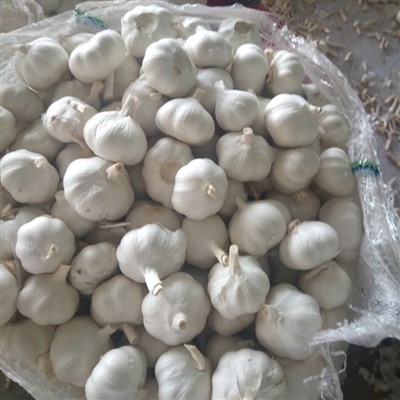
Solubility is a fundamental concept in chemistry, referring to the ability of a substance (solute) to dissolve in a particular solvent to form a homogeneous solution. When it comes to pure white garlic, understanding its solubility in water is not only a matter of scientific curiosity but also has practical implications for various industries, including food, pharmaceuticals, and agriculture. As a supplier of pure white garlic, I am often asked about the solubility of this remarkable ingredient, and in this blog post, I will delve into the topic to provide a comprehensive answer. Pure White Garlic
Composition of Pure White Garlic
Before discussing the solubility of pure white garlic in water, it is essential to understand its chemical composition. Pure white garlic is a rich source of various bioactive compounds, including sulfur – containing compounds, flavonoids, and polysaccharides. The most well – known sulfur – containing compounds in garlic are allicin, alliin, and diallyl disulfide. These compounds are responsible for many of the health benefits associated with garlic, such as its antibacterial, antifungal, and antioxidant properties.
Flavonoids, such as quercetin and kaempferol, are another group of bioactive compounds found in garlic. They have antioxidant and anti – inflammatory effects, which contribute to the overall health – promoting properties of garlic. Polysaccharides in garlic are complex carbohydrates that can have immunomodulatory and prebiotic effects.
Solubility of Different Components of Garlic in Water
Sulfur – containing Compounds
Allicin is a highly reactive and volatile compound. When fresh garlic is crushed or chopped, the enzyme alliinase converts alliin into allicin. Allicin has limited solubility in water. Its hydrophobic nature means that it does not dissolve easily in an aqueous environment. However, some of it can form weak interactions with water molecules, allowing a small amount to dissolve. The solubility of allicin in water is also affected by factors such as temperature, pH, and the presence of other substances. For example, at higher temperatures, the solubility of allicin may increase slightly, but it also decomposes more rapidly.
Alliin, on the other hand, is more soluble in water. It is a polar compound with a structure that allows it to form hydrogen bonds with water molecules. This property makes alliin dissolve relatively easily in an aqueous solution, and it can be extracted from garlic using water – based extraction methods.
Diallyl disulfide is a non – polar compound and has very low solubility in water. It is more soluble in organic solvents such as ethanol or hexane. The non – polar nature of diallyl disulfide means that it has a strong tendency to aggregate and separate from the water phase, making it difficult to dissolve in water.
Flavonoids
Flavonoids in garlic, like quercetin and kaempferol, have limited solubility in water. These compounds are relatively hydrophobic due to their aromatic ring structures. However, their solubility can be enhanced by certain factors. For instance, the presence of hydroxyl groups on their structures allows them to form some hydrogen bonds with water molecules, enabling a small amount to dissolve. Additionally, the solubility of flavonoids can be increased by adjusting the pH of the solution. In alkaline conditions, the flavonoids can form salts, which are more soluble in water.
Polysaccharides
Garlic polysaccharides are hydrophilic polymers. They have an affinity for water due to the presence of numerous hydroxyl groups in their molecular structures. These hydroxyl groups can form hydrogen bonds with water molecules, allowing the polysaccharides to dissolve in water and form viscous solutions. The solubility of garlic polysaccharides is affected by factors such as molecular weight. Generally, polysaccharides with lower molecular weights are more soluble in water than those with higher molecular weights.
Practical Implications of Garlic Solubility in Water
In the Food Industry
The solubility of garlic components in water is crucial for food processing. For example, in the production of garlic – flavored beverages or soups, understanding the solubility of alliin and other soluble components helps in formulating products with the desired garlic flavor. The limited solubility of allicin can pose a challenge, as it may lead to precipitation or loss of flavor over time. To address this issue, food technologists may use emulsification techniques or encapsulation methods to improve the stability and solubility of allicin in water – based products.
In the Pharmaceutical Industry
In the pharmaceutical field, the solubility of garlic bioactive compounds affects their bioavailability. Water – soluble components such as alliin can be more easily formulated into aqueous pharmaceutical preparations, such as oral solutions or injections. On the other hand, for non – water – soluble compounds like diallyl disulfide, special delivery systems are required to enhance their solubility and effectiveness. These may include liposomes, nanoparticles, or microemulsions.
In Agriculture
In agriculture, the solubility of garlic components in water is relevant for foliar sprays and soil drenches. Water – soluble components can be easily mixed with water and applied to plants. For example, garlic extracts containing alliin and polysaccharides can be used as natural pesticides or plant growth promoters. Their solubility in water ensures uniform distribution and easy absorption by plants.
Factors Affecting the Overall Solubility of Pure White Garlic in Water
Temperature
An increase in temperature generally increases the solubility of most substances in water. For garlic components, this is also true to some extent. Higher temperatures can provide more energy for the breaking of intermolecular bonds in the garlic and enhance the interaction between the garlic components and water molecules. However, as mentioned earlier, high temperatures can also cause the decomposition of heat – sensitive compounds like allicin.
Particle Size
The particle size of crushed or powdered garlic affects its solubility in water. Smaller particle sizes have a larger surface area, which allows for more contact between the garlic and water. This results in a faster rate of dissolution. When garlic is finely ground, the water can penetrate more easily into the particles, dissolving the soluble components more efficiently.
pH
The pH of the water can have a significant impact on the solubility of garlic components. For example, as mentioned previously, the solubility of flavonoids can be increased in alkaline solutions. The pH can also affect the stability and solubility of sulfur – containing compounds. In acidic conditions, allicin may be more stable, but its solubility may be different compared to alkaline conditions.
How Our Pure White Garlic Can Be Utilized Based on Solubility
As a supplier of pure white garlic, I am proud to offer a product that can be used effectively in various applications based on its solubility properties. Our pure white garlic is carefully selected and processed to preserve its bioactive components.
For food manufacturers, our garlic can be used to create a wide range of water – based products. The water – soluble alliin in our garlic can provide a consistent and delicious garlic flavor, while the polysaccharides can contribute to the texture and stability of the products. We can also provide technical support to help food manufacturers optimize the use of our garlic in their formulations.
In the pharmaceutical industry, our pure white garlic can be a valuable raw material. The water – soluble components can be easily extracted and incorporated into pharmaceutical preparations. We can work with pharmaceutical companies to develop customized extraction methods to ensure the maximum recovery of bioactive compounds.
In agriculture, our garlic products can be used to create natural and effective plant protection products. The solubility of the key components in water allows for easy application and absorption by plants. We can provide guidance on the proper use of our garlic products in agricultural settings.
Conclusion
The solubility of pure white garlic in water is a complex topic that depends on the chemical composition of garlic and various external factors. Different components of garlic have different solubilities in water, which have significant implications for various industries. As a pure white garlic supplier, I understand the importance of these solubility properties and am committed to providing high – quality garlic products that can be used effectively in different applications.
Pure White Garlic If you are interested in purchasing our pure white garlic for your food, pharmaceutical, or agricultural needs, I encourage you to contact us for further discussions. We are ready to work with you to meet your specific requirements and provide you with the best possible solutions.
References
- Block, E. (1985). The chemistry of garlic and onions. Scientific American, 252(3), 114 – 123.
- Lawson, L. D., & Wang, Z. Y. (1994). Composition and stability of commercial garlic products. Journal of Agricultural and Food Chemistry, 42(11), 2548 – 2556.
- Ried, K., & Frank, O. R. (2014). Garlic for the prevention of cardiovascular disease: a systematic review and meta – analysis. Preventive Medicine, 62, 25 – 30.
Nine Three Import and Export Co., Ltd.
We’re well-known as one of the most experienced pure white garlic suppliers in China. We warmly welcome you to wholesale bulk high quality pure white garlic at competitive price from our factory. If you have any enquiry about cooperation, please feel free to email us.
Address: No.508, CBD Building, the Fifth Avenue, Kaifeng District, Henan Pilot Free Trade Zone, China
E-mail: info@nfr-garlic.com
WebSite: https://www.nfr-garlic.com/
